"Intelligence-Connected Future"
International Brain-Machine Interface Conference & 2nd China Brain-Machine Intelligence Summit
Theme: Brain-Machine Integration, Intelligence-Connected Future
Introduction
On December 11–12, 2025, the 2025 “Intelligence-Connected Future” International Brain-Machine Interface (BMI) Conference and 2nd China Brain-Machine Intelligence Summit were successfully held in Hangzhou, co-hosted by Zhejiang University’s Brain-Machine Intelligence National Key Laboratory. The event brought together 13 academicians from China and abroad, over 50 top experts, industry leaders, and investors, and attracted more than 1,000 participants from universities, research institutes, medical institutions, and industrial enterprises.
Distinguished attendees at the opening ceremony included Academician Wu Zhaohui (Vice President of the Chinese Academy of Sciences), Lu Shan (Vice Governor of Zhejiang Province), Fu Xiaofeng (Deputy Director of the Department of Science and Technology), Zhao Chaofan (Deputy Director of the Ministry of Industry and Information Technology), Zhejiang University President Academician Ma Yanming, Liu Ying (Member of the Hangzhou Municipal Party Committee and Secretary of Yuhang District), and Gao Guofei (Secretary-General of the Hangzhou Municipal Government). Leaders from relevant provincial departments—Science and Technology, Industry and Information, Education, Health, Medical Insurance, and Drug Administration—also attended, alongside Springer Nature Greater China President Anne O.
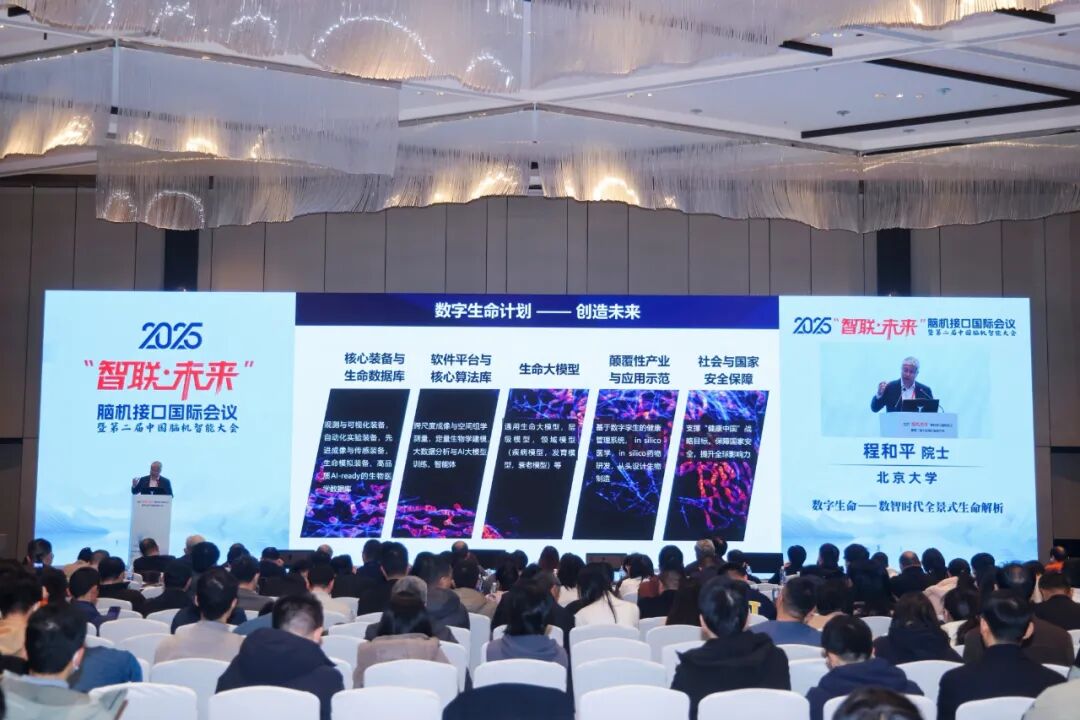
The conference featured keynote addresses from 13 world-renowned experts, including Wu Zhaohui, Duan Shumin, Liu Ming, Luo Qingming, Shi Songhai, Zheng Hairong, Cheng Heping, John Rogers (U.S. National Academy of Sciences), Cuntai Guan (Singapore Academy of Engineering), and Karl Friston (European Academy of Sciences).
Highlights of the event included signing and launch ceremonies for:
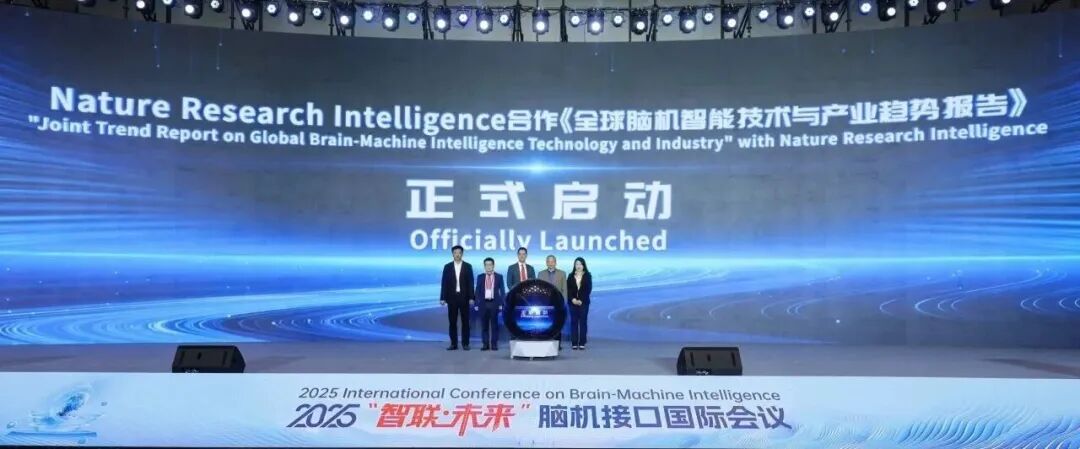
The Global Brain-Machine Intelligence Technology and Industry Trends Report in collaboration with Nature Research Intelligence.
ISO/IEC international standards for brain-machine interfaces.
Zhejiang Province Major BMI Innovation Consortium.
With the theme “Brain-Machine Integration, Intelligence-Connected Future,” the conference featured:
13 high-level keynote lectures.
4 workshops on cutting-edge topics.
10 thematic symposia.
Over 60 poster presentations showcasing the latest research.
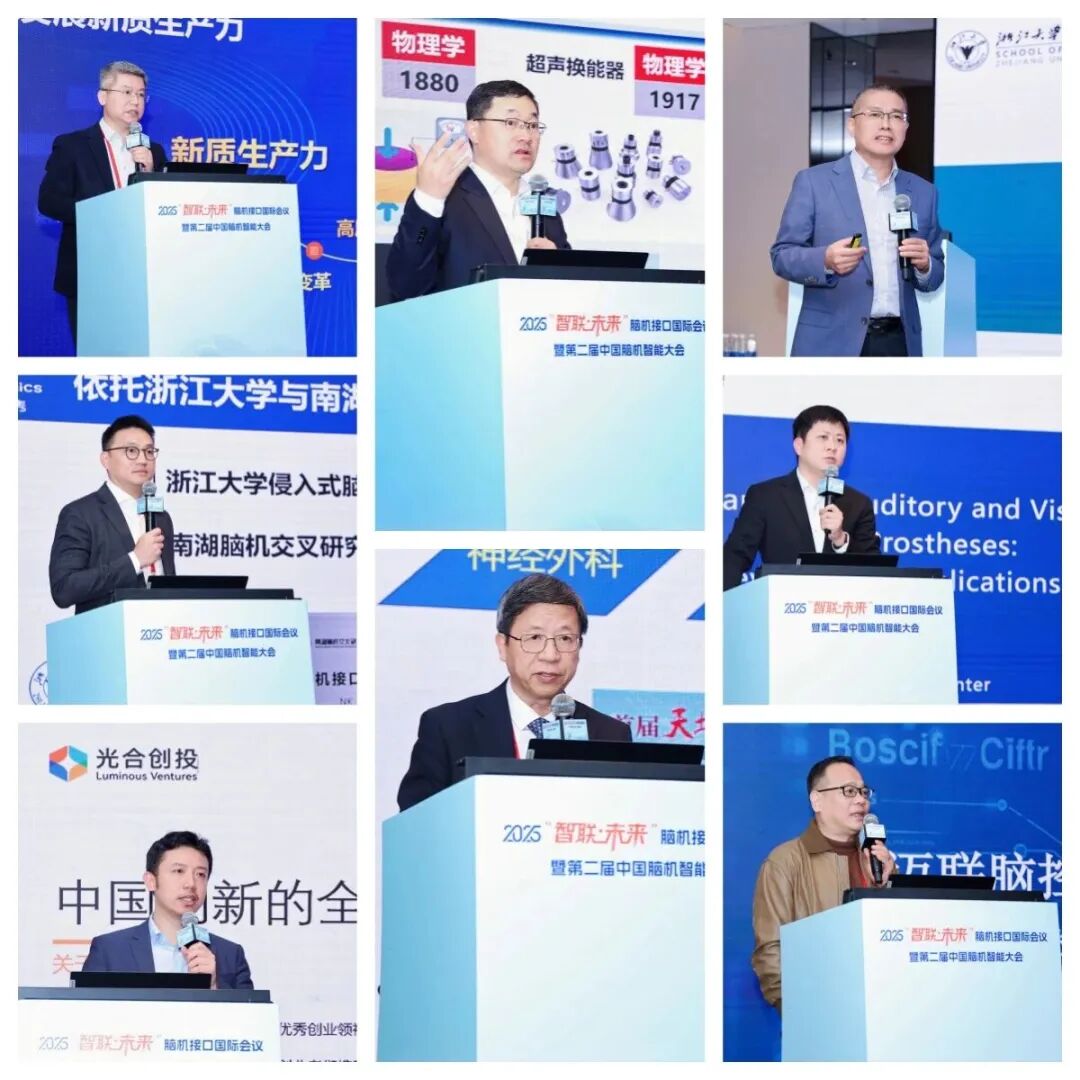
Over 80 scholars and industry experts shared insights on frontier research and emerging technologies. Through keynote talks, panel discussions, and poster sessions, the event fostered deep academic and industry exchanges, creating a high-level platform integrating cutting-edge science with industrial practice.
The conference was jointly organized by the Hangzhou Municipal Government, Zhejiang Provincial Department of Science and Technology, Zhejiang University, and the Chinese Association for Artificial Intelligence. It was co-hosted by the Brain-Machine Intelligence National Key Laboratory, Yuhang District Government, and the Nanhu Brain-Machine Interdisciplinary Research Institute, with support from the Hangzhou Future Sci-Tech City (Haichuang Park) Management Committee.
Academic Highlights: Frontier Research and Multidimensional Discussions
The 13 keynote lectures, delivered by academicians including Wu Zhaohui, John Rogers, and Karl Friston, focused on major advances and challenges in brain-machine intelligence. Topics included “From AI to CI: The Development of Brain-Machine Intelligence” and “Intelligent Chips for Brain-Machine Interfaces: Progress and Prospects.”
Concurrent workshops on December 11 covered:
Motor and language brain-machine interfaces.
Brain state analysis.
Brain-inspired large models.
Brain-inspired computing and perceptual chip applications.
On December 12, nine thematic symposia and a young scholars’ forum were held, covering areas such as:
Brain-machine decoding methods.
Deep brain modulation for psychiatric disorders.
Brain-inspired hardware and systems.
Brain-machine-assisted diagnostics and therapy.
Brain-computer interface systems.
Brain-inspired perception and neural computation.
Cognitive foundations and ethics.
Brain-inspired computing applications.
Brain-inspired mechanisms and methodologies.
These sessions facilitated interdisciplinary dialogue and collaboration, while the young scholars’ forum provided an exclusive platform for early-career researchers to showcase their work.
The poster sessions were also a highlight, featuring nearly 100 outstanding Chinese papers in BMI, including works published in Science and Nature journals, sparking lively discussions and enriching academic exchanges.
Industry Engagement: Showcasing Full-Chain Innovation
On December 11, a special tour of leading BMI enterprises was organized. Participants visited 20 key organizations, including the Nanhu Brain-Machine Interdisciplinary Research Institute, Qing Shi Yong Jun, ZJU Kezheng BMI Industrialization Base, QiangNao Technology, and Lingxi Technology.
Exhibited innovations ranged from:
Invasive BMI-controlled Chinese character writing systems.
Implantable deep brain stimulators.
Non-invasive intelligent bionic prosthetics.
Auditory reconstruction devices.
1,280-channel high-resolution neural stimulation chips.
Wearable EEG-based optogenetic therapy devices.
This provided attendees with a comprehensive view of China’s BMI capabilities, spanning from fundamental research to clinical translation.
Empowering the Future: Global Collaboration, Standards, and Innovation
The lab officially launched the Global Brain-Machine Intelligence Technology and Industry Trends Report with Nature Research Intelligence. It also advanced international standardization through the ISO/IEC JTC 1/SC 43 BMI standards project. The Nanhu BMI Interdisciplinary Research Institute, Zhejiang University, and key enterprises formed an innovation consortium to initiate Zhejiang Province’s major BMI project.
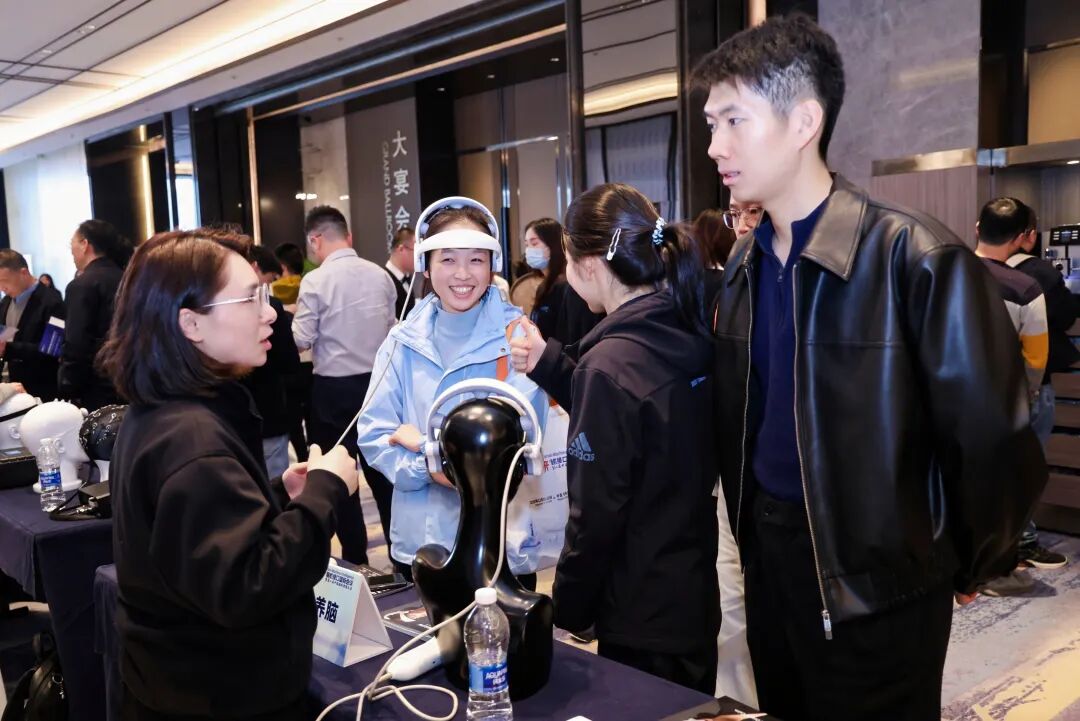
Additionally, eight projects from the “Maker World • Hangzhou Forward” Brain-Inspired Intelligence Special Competition officially landed in Yuhang, injecting new vitality into the regional industry ecosystem.
Industry-Finance Dialogue: Charting a Commercial Path for BMI
The conference hosted a special industry-investment session, focusing on translating BMI technologies to market. Leaders from academia, industry, clinical practice, and venture capital explored viable pathways for commercialization, shared trends, and exchanged insights on business model development.
Looking Ahead: 2026 and Beyond
As the opening year of China’s 15th Five-Year Plan, the conference served not only as a high-level academic and industrial dialogue but also as a strategic planning and mobilization platform aligned with national priorities and global technology frontiers.
By promoting interdisciplinary collaboration and integrating AI with neuroscience, the event set the stage for theoretical breakthroughs and practical applications in brain-machine intelligence. The consensus and initiatives cultivated here are expected to accelerate BMI technology toward deeper brain-machine integration, broader application scenarios, and more robust ethical governance.
With this conference as a starting point, the brain-machine interface field is poised to become a hub of disruptive innovation, driving future industrial growth and contributing to national scientific advancement and human health.