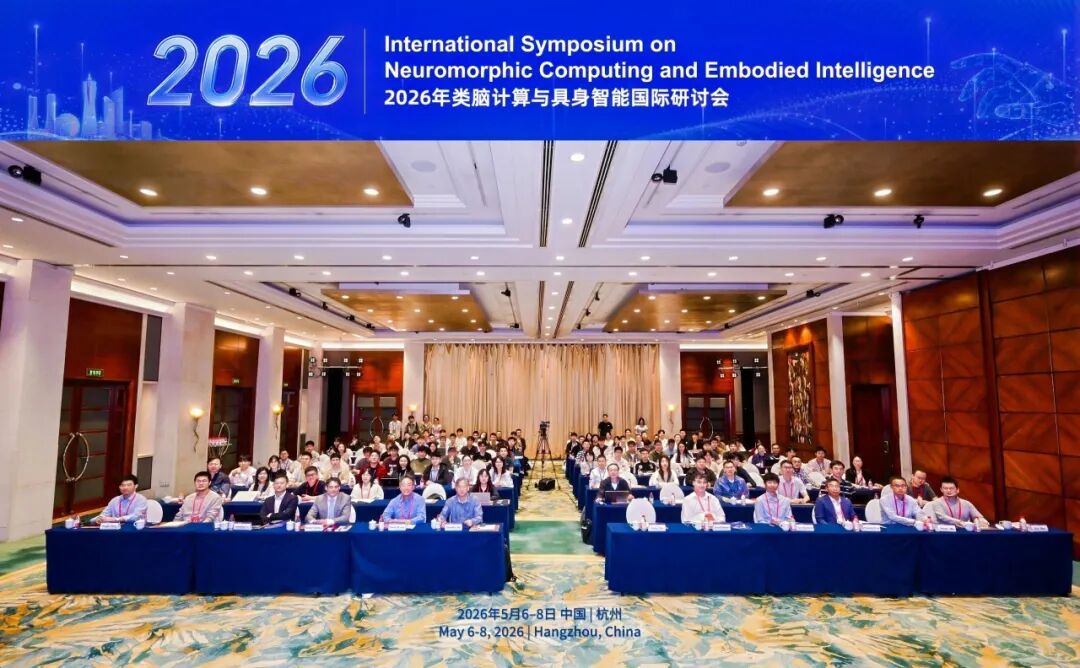
From May 6 to 8, 2026, the 2026 International Symposium on Neuromorphic Computing and Embodied Intelligence (NeuroEI 2026) was successfully held at The Dragon Hotel in Hangzhou. The symposium was hosted by the State Key Laboratory of Brain machine Intelligence (Zhejiang University) and the College of Computer Science and Technology (Zhejiang University), and co organized by the Nanhu Brain computer Interface Institute, Hangzhou Dianzi University, Zhejiang University of Technology, The Hong Kong Polytechnic University, the CAAI Brain machine Integration and Bio machine Intelligence Committee, the CSIG Brain like Vision Committee, and the ACM Hangzhou Chapter.
Gathering IEEE/AAAI Fellows, leading global experts, and young scholars, the symposium explored how to translate brain information processing mechanisms into efficient algorithms and enable adaptive real world interactions for embodied systems, with the goal of bridging the gap between theoretical research and industrial deployment.
Gathering of Masters: Exploring Cutting Edge Frontiers
Professor Pan Gang, Director of the State Key Laboratory of Brain machine Intelligence at Zhejiang University, presided over the opening ceremony, followed by warm welcome remarks from Professor Ren Kui, Dean of the College of Computer Science and Technology at Zhejiang University. Extending a warm welcome to all global attendees, they emphasised the profound significance of cross disciplinary synergy among brain machine intelligence, computer science, and embodied AI in driving future technological revolutions.
Following this, Academician Qiao Hong—Member of the Chinese Academy of Sciences and Director of the State Key Laboratory of Multimodal Artificial Intelligence Systems—delivered the opening address. Qiao elucidated the frontier trends and core technological evolutions in brain inspired computing and embodied AI. She delved into the fusion pathways connecting human brain information processing, neurocognitive theories, and multimodal physical world interactions, while identifying pivotal directions for cross disciplinary synergy and underscoring the vital importance of accelerating the engineering deployment of next generation brain inspired models and embodied systems.
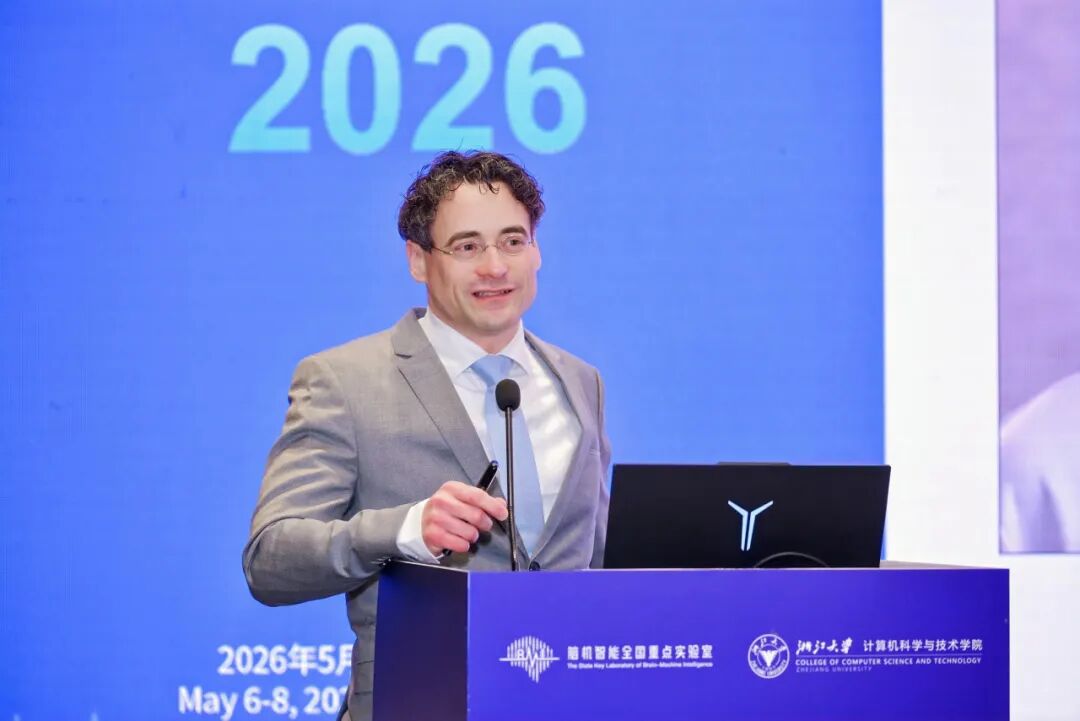
Subsequently, 11 international academic masters and leading scholars delivered phenomenal keynote speeches, covering topics ranging from fundamental neuromorphic theories such as synaptic plasticity and spiking neural networks, to core technical breakthroughs in bionic robotics, autonomous unmanned systems, and multimodal embodied AI:
Robert Gütig (Charité – Universitätsmedizin Berlin): Explored how interactions between long and short term synaptic plasticity transform temporal neural representations into spatial ones.
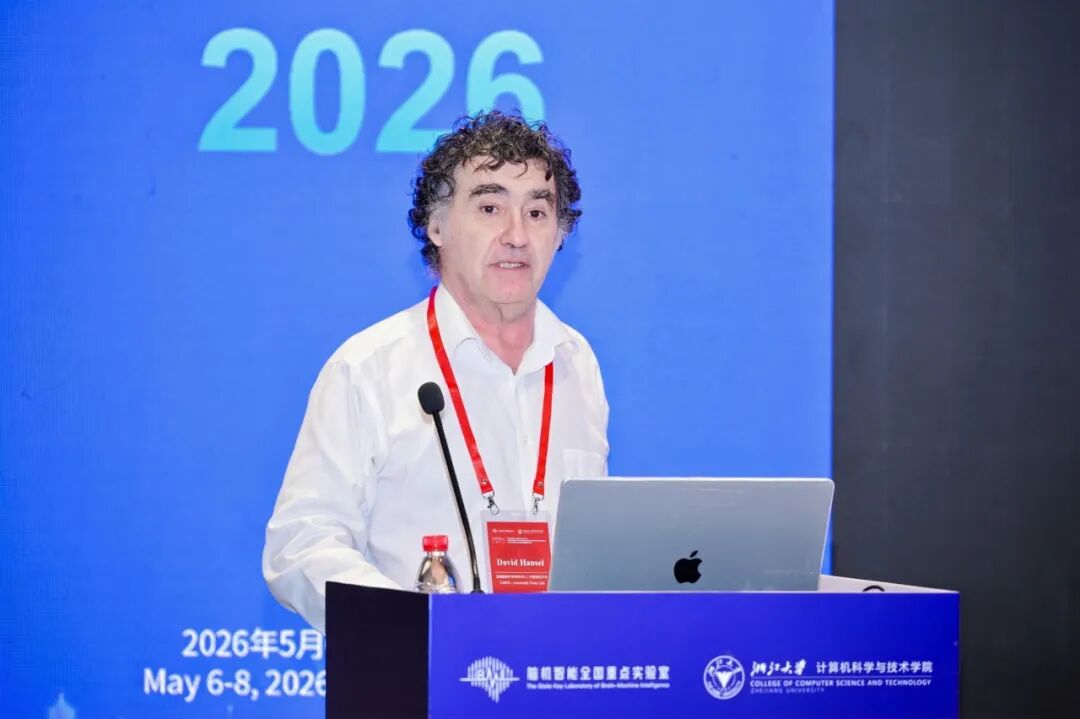
David Hansel (CNRS, France): Presented an in depth analysis of the computational power of randomness, and selectivity in the thalamic input to mouse visual cortex.
Jiang Shuqiang (Institute of Computing Technology, CAS): Shared explorations on the “self model” for embodied artificial intelligence.
Daniel D. Lee (Cornell University): Analysed cutting edge advances in AI white boxes and neural representation geometry.
Jin Yaochu (Westlake University / Member of the European Academy of Sciences): Outlined a development roadmap from brain like computing to brain like embodied intelligence.
Liu Lianqing (Shenyang Institute of Automation, CAS): Introduced intelligent evolution and implementation methods for bio syncretic robots.
Wang Hesheng (Shanghai Jiao Tong University): Systematically presented vision based robot navigation and manipulation technologies.
Taro Toyoizumi (RIKEN Center for Brain Science, Japan): Shared synaptic plasticity models for dimensionality reduction.
Zhao Shiyu (Westlake University): Focused on cooperative aerial robotic manipulation and multi robot intelligence.
Abhinav Valada (University of Freiburg, Germany): Discussed robot learning mechanisms for open world autonomous navigation and perception.
Friedemann Zenke (Friedrich Miescher Institute for Biomedical Research, Switzerland): Elaborated on learning algorithms for spiking and physical neural networks.
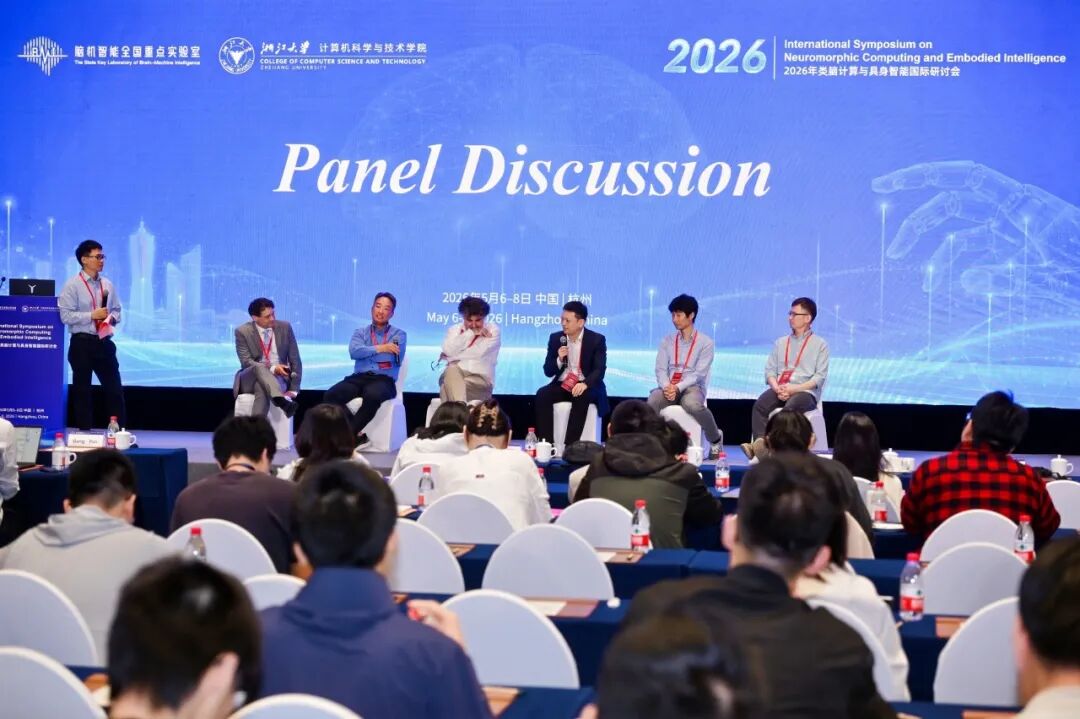
Panel Discussion: Sparkling Theoretical Clashes
The panel discussion, moderated by Professor Tang Huajin from Zhejiang University, featured a distinguished lineup of six top tier scholars: Robert Gütig, Daniel D. Lee, David Hansel, Liu Lianqing, Taro Toyoizumi, and Zhao Shiyu. Centred on “Theoretical Breakthroughs in Brain Inspired Computing” and “Industrial Deployment Bottlenecks of Embodied AI in Complex Real World Environments,” the panelists engaged in a sharp, forward looking, and deeply insightful debate, sparking a wealth of brilliant ideas and visionary perspectives.
Closing Ceremony: Looking Forward to the Next Decade
Chaired by Conference General Chair Professor Tang Huajin (ZJU), the closing ceremony concluded with an inspiring summary. Reflecting on his decade long journey of organising and participating in international symposia, Professor Tang noted the phenomenal growth of brain inspired and intelligent technologies. After extending sincere thanks to all attendees, organisers, and volunteers, he looked forward to another decade of close collaboration, urging the community to advance hand in hand toward new heights in research and innovation.