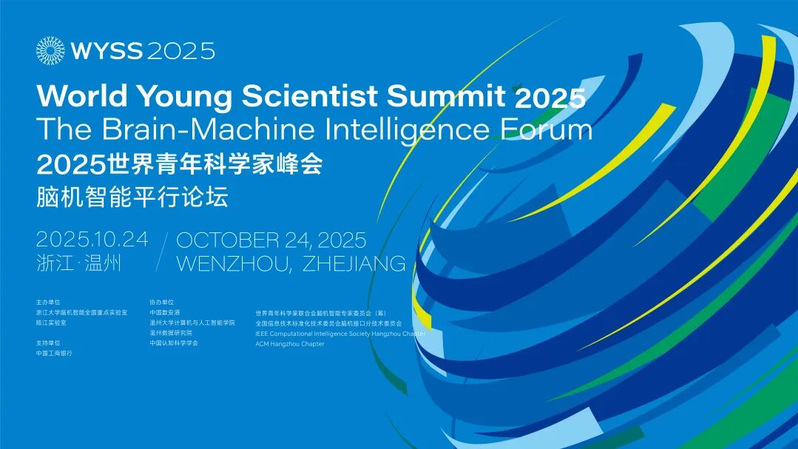
On October 24, 2025, the Brain-Computer Intelligence Forum, one of the key parallel forums of the 2025 World Young Scientist Summit, was successfully held at the Grand Mercure Hotel in Wenzhou, Zhejiang.
The forum was jointly organized by the National Key Laboratory of Brain-Computer Intelligence at Zhejiang University and the Oujiang Laboratory, with China Digital Security Port, Wenzhou University School of Computer Science and Artificial Intelligence, Wenzhou Data Research Institute, Chinese Society for Cognitive Science, and several other academic and professional associations serving as co-organizers. The event received strong support from the Industrial and Commercial Bank of China.
Focusing on cutting-edge topics such as brain-computer interfaces, neuromorphic intelligence, neural engineering, and brain disease modulation, the forum brought together academicians, experts, young scholars, and industry representatives from China, Cuba, the United States, and other countries. Through keynote speeches, award presentations, and research showcases, participants engaged in a high-level, intergenerational dialogue on the future of brain-computer intelligence.
Opening Ceremony
Gathering of Great Minds, Embarking on a New Journey
The opening ceremony was hosted by Professor Pan Gang, Director of the National Key Laboratory of Brain-Computer Intelligence, Zhejiang University.
Distinguished guests including Academician Song Weihong, Director of the Oujiang Laboratory; Guo Jiliang, Vice Chairman of the Zhejiang Association for Science and Technology; and Zhuge Qichuan, Vice Chairman of the Wenzhou CPPCC, delivered congratulatory speeches. They extended warm congratulations on the successful convening of the forum and highly praised the rapid progress of brain-computer intelligence and the creativity of young scientists.
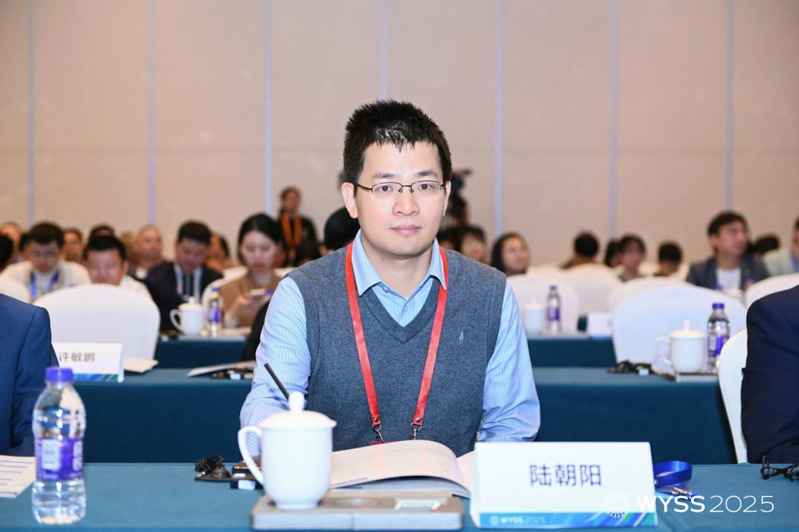
Professor Lu Chaoyang, President of the World Young Scientist Association, attended the ceremony as a distinguished guest.
Award Ceremony
Inspiring Young Talent, Shaping the Future
To recognize and encourage young scientists demonstrating exceptional potential in the field of brain-computer intelligence, the World Young Scientist Association and the National Key Laboratory of Brain-Computer Intelligence at Zhejiang University jointly established the “2025 China Rising Stars in Brain-Computer Intelligence” award.
The selection was open to scholars under the age of 40 based in Mainland China, Hong Kong, or Macao, and required recommendations from two leading experts in the field. The nine-member review committee, chaired by Academician Duan Shumin, conducted the final evaluation.
During the ceremony, Professor Lu Chaoyang presented honorary certificates to the awardees:
Liu Quanying (Southern University of Science and Technology), Ma De (Zhejiang University), Yujie Wu (The Hong Kong Polytechnic University), Yang Yuxiao (Zhejiang University), Yu Zhaofei (Peking University), and Zheng Weilong (Shanghai Jiao Tong University).
A short video followed, introducing each laureate’s research focus and achievements, offering the audience an insightful overview of their innovative work.
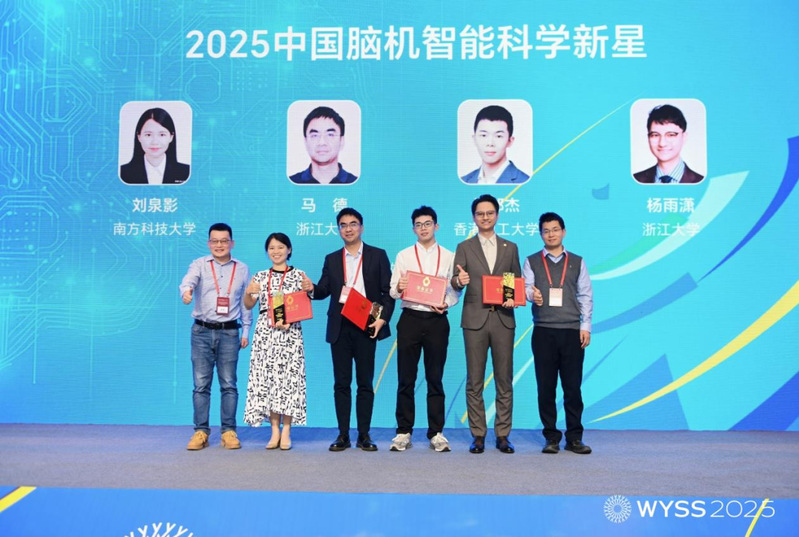
Professor Lu Chaoyang (first from right) and Professor Pan Gang (first from left) pose with a rising star in brain-computer interface science
Keynote Presentations
Frontier Insights, Sparks of Wisdom
The academic sessions were chaired by Academician Mitchell Valdés-Sosa, Director of the Cuban Center for Neuroscience; Professor Chen Heng of Wenzhou University; and Dr. Zhang Shaomin of Zhejiang University’s Qiushi Academy for Advanced Studies.
Renowned scholars shared the latest breakthroughs in brain-computer intelligence, including:
l Academician Pedro Valdés-Sosa (China-Cuba Joint Belt and Road Laboratory for Neurotechnology and Brain-Machine Interaction, University of Electronic Science and Technology of China): Applications of hybrid neurophysical–AI models in population brain health.
l Professor Stephen Richard Williams (Oujiang Laboratory): Regional specificity of neuronal excitability in the human cerebral cortex.
l Professor Dong Song (University of Southern California): AI-powered brain-computer interfaces in cognitive prosthesis development.
l Professor Raymond Tong (The Chinese University of Hong Kong): Neurodynamics of stroke rehabilitation based on brain-computer interfaces.
l Professor Xu Minpeng (Tianjin University): Recent advances in non-invasive brain-computer interfaces.
l Associate Professor Yiwen Wang (Hong Kong University of Science and Technology): Spiking prediction models based on behavioral reinforcement.
l Professor Wu Jinjian (Xidian University): Intelligent computational imaging for next-generation dynamic sensing chips.
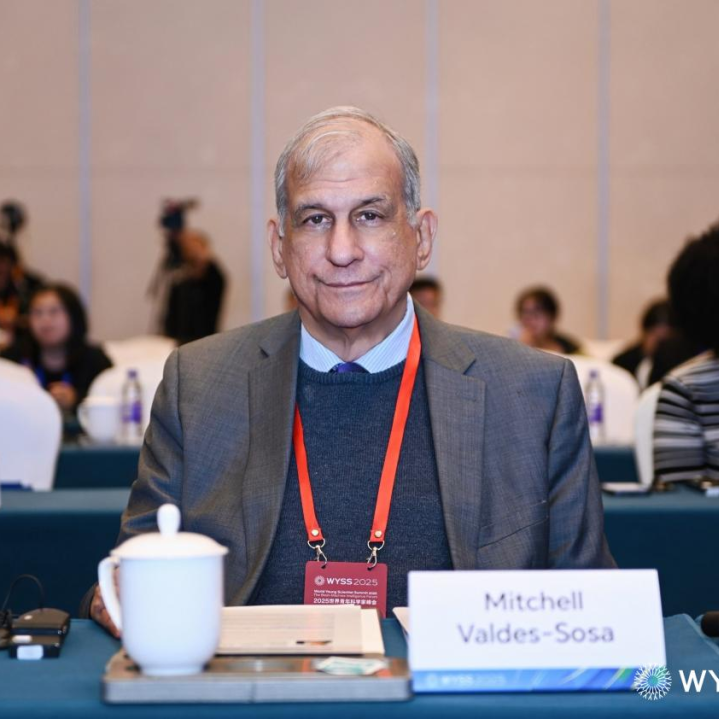
Forum Moderator: Mitchell Valdés-Sosa
Rising Star Presentations
The Power of Youth, The Promise of Tomorrow
During the “China Rising Stars in Brain-Computer Intelligence” presentation session, several awardees delivered talks on topics such as neuromorphic computing chips, hybrid brain-computer learning frameworks, spiking neural perception, and adaptive invasive brain-computer interfaces—showcasing the vision, creativity, and scientific strength of China’s young researchers in the field.
Looking Ahead
Connecting Minds and Machines, Creating the Future Together
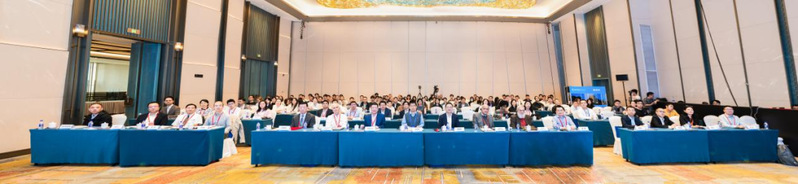
Forum Group Shot
As a key component of the 2025 World Young Scientist Summit, the Brain-Computer Intelligence Forum successfully built an international platform for academic exchange, facilitating in-depth dialogue and interdisciplinary collaboration.
By honoring emerging talent, sharing frontier discoveries, and bridging academia, industry, and research, the forum has injected fresh momentum into the theoretical innovation, technological advancement, and industrial application of brain-computer intelligence in China.
Together, we look forward to a future where brain-computer intelligence continues to shine brightly—transforming medical rehabilitation, human-computer interaction, and neuromorphic computing worldwide.