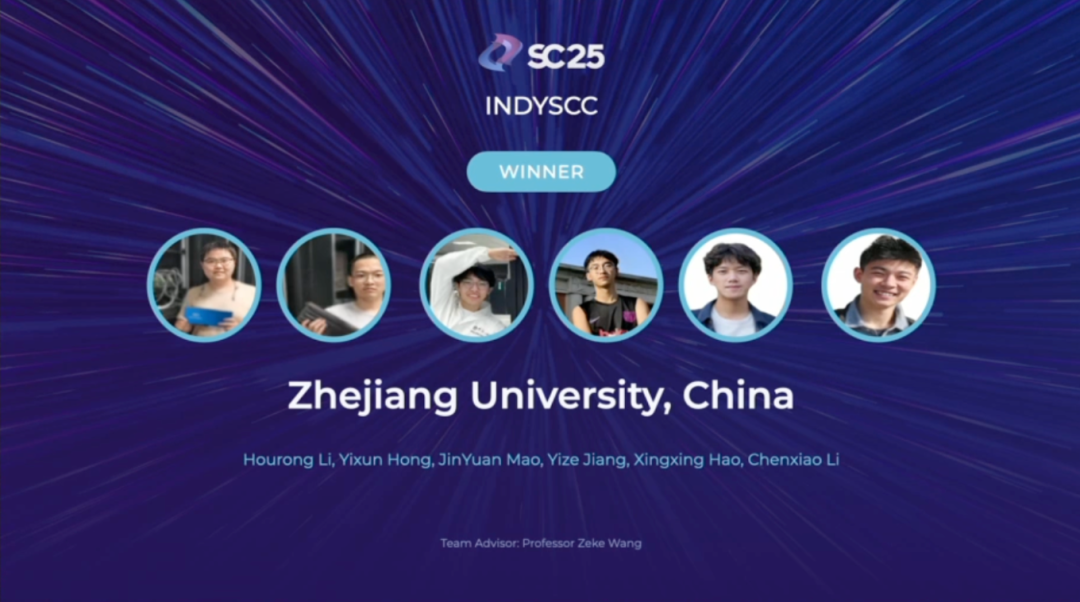
At 3:00 AM Beijing time on November 21, 2025, exciting news arrived from the SC25 International High-Performance Computing Conference held in St. Louis, USA. In the highly anticipated IndySCC Student Cluster Competition, the Zhejiang University Supercomputing Team distinguished itself among top universities worldwide with its outstanding performance, achieving a perfect score on two competition tasks and securing top placements in several others, ultimately winning the global championship in this track.
The Zhejiang University team for this competition consisted of Li Chenxiao, Jiang Yize, and Hong Yixun from the College of Computer Science and Technology, Hao Xingxing from the School of Mathematical Sciences, Li Hourong from the School of International Studies, and Mao Jinyuan from the School of Management. The team was advised by Associate Professor Chen Jianhai, Hundred-Talent Program Researcher Wang Zeke, Professor Zhang Yin, Long-term Professor He Shuibing, and Hundred-Talent Program Researcher Zhuang Bohan. This multidisciplinary undergraduate team demonstrated solid technical expertise and exceptional teamwork during the demanding 46-hour online finals.
01 Premier Stage: The SC Conference and IndySCC Competition
The SC (Supercomputing Conference) International Conference is globally recognized as the highest-level and most influential academic event in the field of high-performance computing. Since its inception in 1988, it has been dedicated to promoting the exchange and development of HPC technologies worldwide. The 2025 SC Conference, held from November 16 to 21 in St. Louis, USA, once again became the focus of the global supercomputing community.
The Student Cluster Competition (SCC) is one of the core events of the SC Conference. It challenges participating teams to build and optimize a supercomputing cluster on-site within 48 hours while completing cutting-edge scientific application tasks, serving as an ultimate test of students' system design and optimization capabilities. Due to factors such as equipment requirements, mainland Chinese university teams were not invited to participate in the main SCC track this year. However, the IndySCC track shares competition tasks with the main track, with teams utilizing cloud computing resources uniformly provided by the organizers for the final online competition. This format attracted teams from universities across North America, Europe, Asia, Africa, and other regions. Top domestic supercomputing teams from Peking University, Tsinghua University, Shanghai Jiao Tong University, and others also participated in the IndySCC, making the competition fiercely competitive and challenging, rivaling the intensity of the SCC.
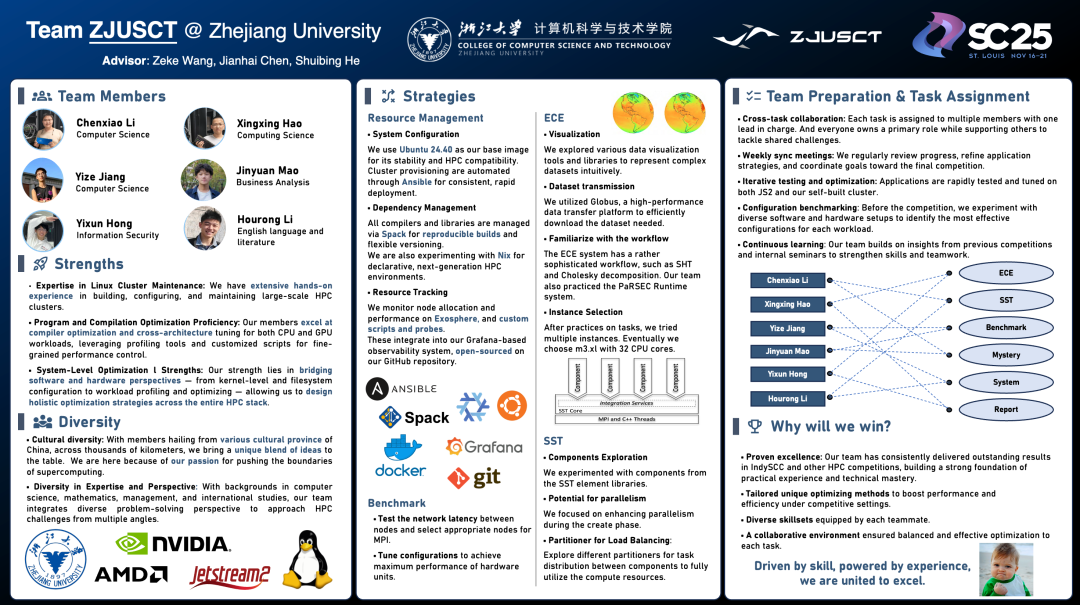
Team presenting their poster
02 Extreme Challenge: Multidisciplinary Cutting-Edge Competition Tasks
The IndySCC25 tasks covered four major areas: the HPL benchmark test, climate simulation, system simulation, and high-energy physics. Teams were required to perform a 24-hour extreme computing power test and fine-tune parameters in a virtualized environment using HPL. In the Exascale Climate Emulator (ECE) task, they had to deploy, run, and optimize a climate simulator with limited resources, balancing understanding of Earth systems and parallel job scheduling. Using the Structural Simulation Toolkit (SST), they needed to evaluate and select optimal computer system configurations, testing their system architecture and resource allocation capabilities. Additionally, a mystery task involving the high-energy physics ACTS framework required teams to simulate massive charged particle trajectories and efficiently process a large number of particle collision events, comprehensively assessing their system architecture design, application understanding, and performance optimization skills.
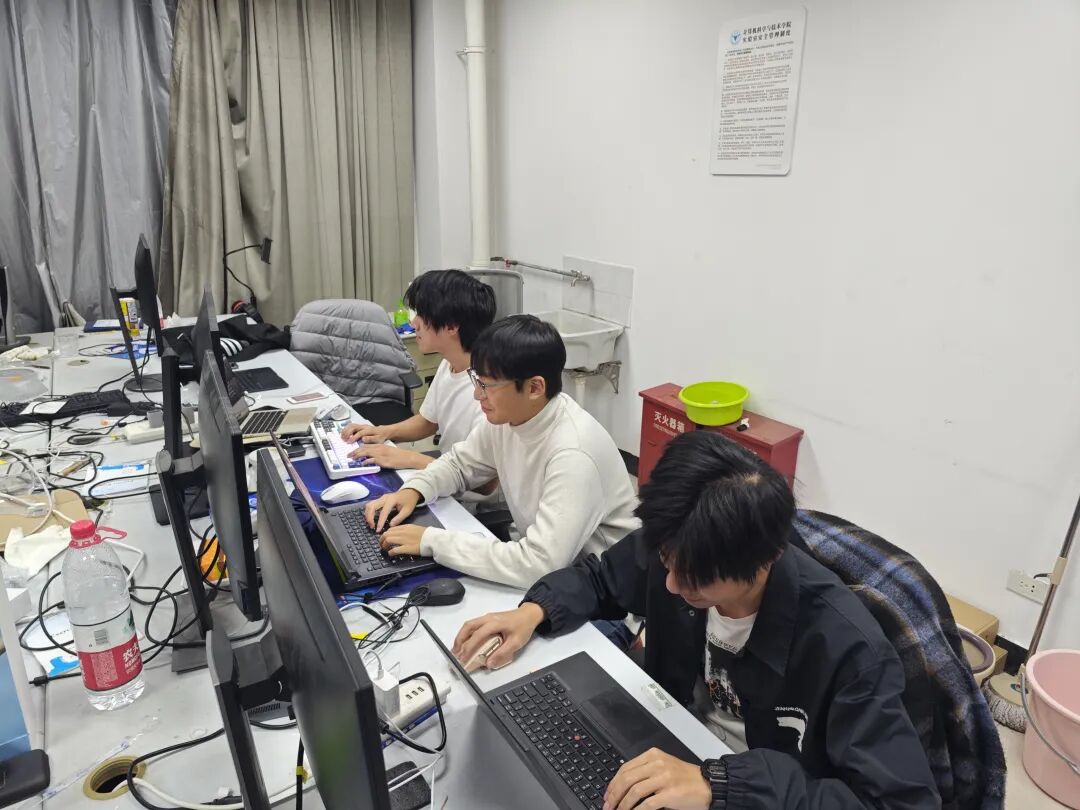
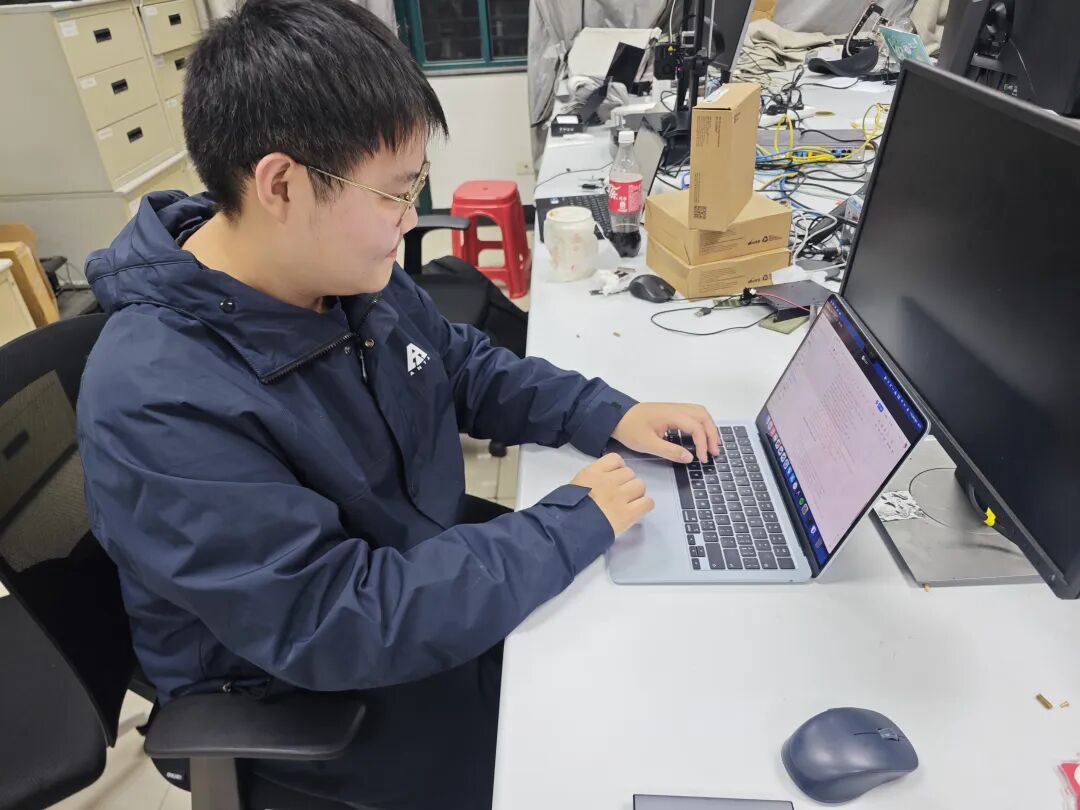
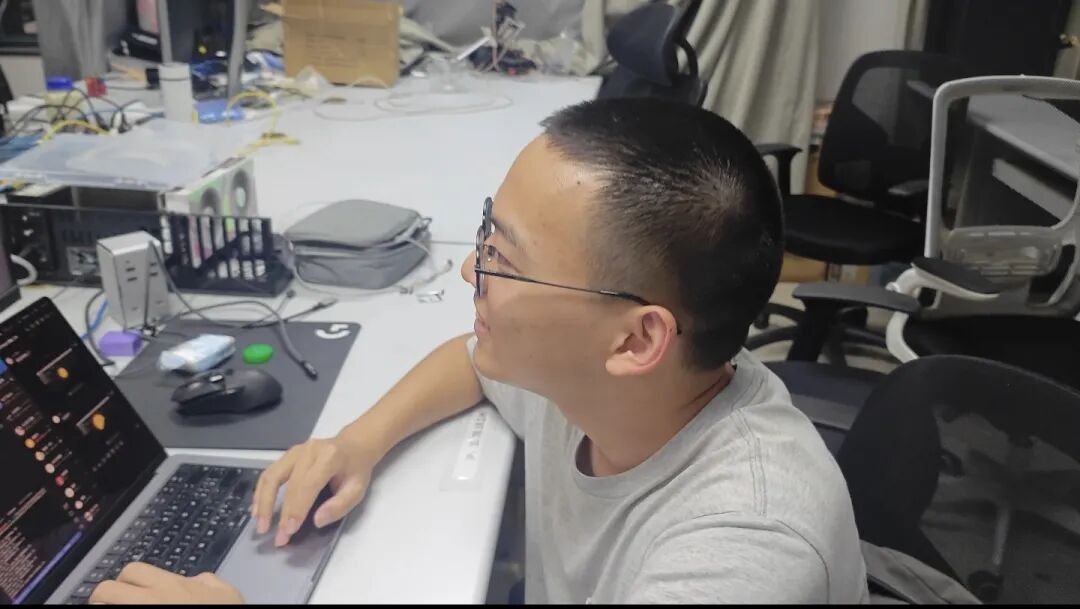
Team members working late into the night in Lab 512
03The Path to Victory: Strategy, Collaboration, and Consistent Performance
This year's team was led by two experienced members and brought together students with diverse backgrounds in information security, data science, English, and other disciplines. During the 46-hour finals, members took on specific roles such as system monitoring, application optimization, and result validation. Through close coordination, they ensured stable performance across all tasks. The team's diverse composition provided unique perspectives and solutions for tackling different types of challenges.
1. Thorough Preparation and Cloud Performance Optimization
In response to the uniform cloud cluster resources, the team conducted multiple rounds of system testing and optimization before the competition, performing detailed analyses from network topology to storage I/O. For the HPL test, through reasonable parallel partitioning, BLAS library selection, and compilation parameter tuning, they achieved a good resource match and delivered excellent floating-point performance.
2. Scientific Analysis and Precise Application Optimization
For the climate simulation task, the team started with the algorithm structure, focusing on core components like spherical harmonic transforms and matrix operations. Team members with backgrounds in atmospheric sciences shared model principles, providing theoretical support for code optimization. Through multiple rounds of experiments to adjust parameters, they struck a balance between computational throughput and single-task completion time. In the system simulation task, the team optimized process layout and resource allocation strategies to improve simulation efficiency.
3. Rapid Response and Conquering the Mystery Task
Faced with the ACTS high-energy physics task, the team quickly organized technical analysis and efficiently completed software compilation and environment deployment. By reasonably configuring parallel processes and memory allocation, they enhanced processing efficiency while ensuring result accuracy.
This year's team, composed of members from diverse disciplines, fully leveraged its cross-disciplinary advantages. During the 46-hour finals, the team performed in-depth optimization for the cloud environment, overcoming algorithmic bottlenecks in the HPL benchmark, climate simulation, and system simulation tasks, demonstrating strong performance. Particularly in the ACTS task, the team swiftly completed compilation, deployment, and parallel strategy optimization, earning the only perfect score across all teams. Ultimately, with comprehensive leading performance in the ACTS, SST, and ECE tasks, they secured first place in the overall standings.
04 Reflections from Team Members
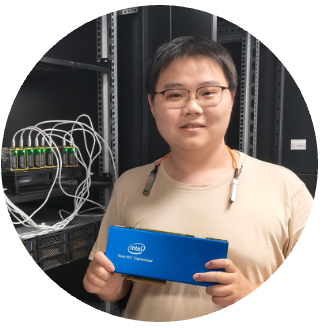
Li Chenxiao (Team Lead, Mystery Task)
In this competition, I was primarily responsible for the Mystery task and also served as the team lead. Thanks to the experience I gained last year in compiling and running large-scale projects for the ICON task in IndySCC, we were able to get the ACTS application up and running quickly this year, giving us a crucial time advantage. This was key to completing the maximum number of simulation events within the limited timeframe.
During the competition, I was also responsible for monitoring the progress of each task, coordinating division of labor, allocating computing resources, and providing regular overall updates. Seeing my teammates showcase their unique skills, staying up late together to modify code, and being thrilled by the glowing lines of code late at night—I will probably never forget those two nights spent competing in IndySCC.
This was my last time participating in IndySCC. I hope the younger members of the supercomputing team continue to push hard next year. I have high hopes for you!
Li Hourong (Team Member, ECE Task)
In this competition, I was responsible for the ECE (Exascale Climate Emulator) task. This task involved complex background knowledge. Before the competition, we prepared thoroughly for the program and anticipated possible unexpected situations. Although we encountered some difficulties during pre-competition practice, they were all resolved before the official start. Thanks to the ample preparation, we were able to compile smoothly and proceed with parameter tuning immediately after the competition began, making full use of every minute.
I would like to especially thank the advisors and senior members of the supercomputing team for their guidance and for providing excellent logistical support during the competition, allowing us to focus entirely on the tasks.
05 Sustained Effort and Continuous Progress
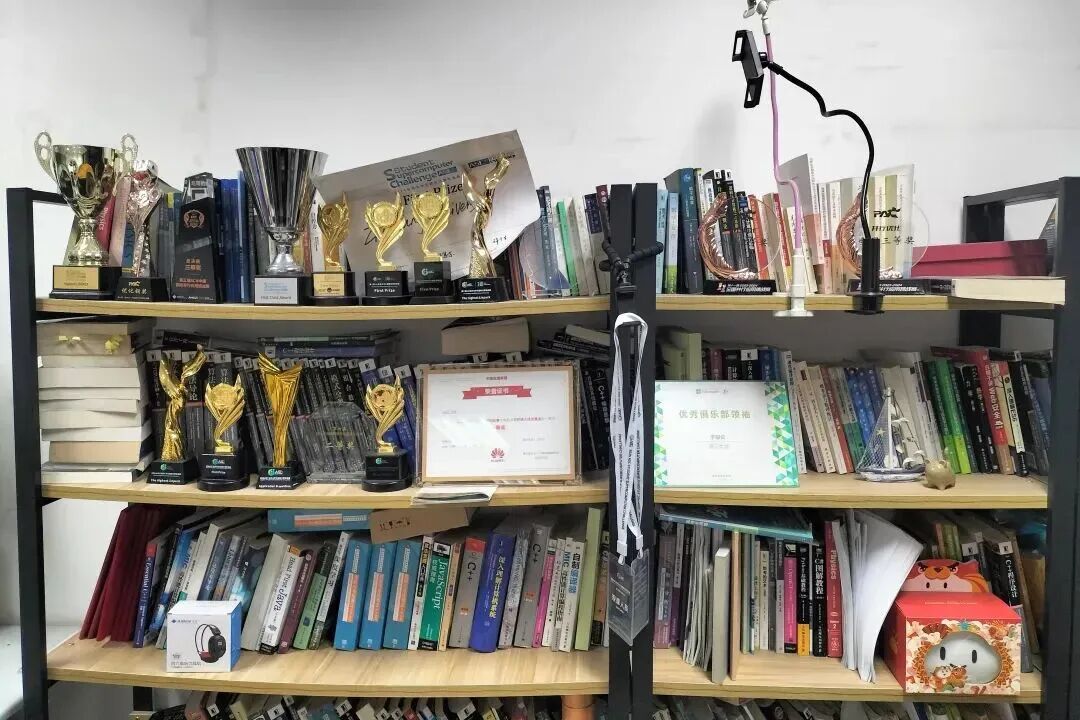
Since its establishment in 2014, the Zhejiang University Supercomputing Team has developed over the years into a high-caliber team that ranks within the global first tier of undergraduate supercomputing. The team participates in all top-tier domestic and international student competitions, including the three major international supercomputing championships: ASC, ISC, and SCC/IndySCC, as well as top domestic competitions like PAC, IPCC, CPC, Solver Challenge, and the Huawei ICT Competition China Challenge. The team has accumulated over 50 awards in total.
In the ASC World Student Supercomputing Challenge, initiated by China with support from Inspur, the team has won 8 First Prizes (2014-2016, 2018, 2020/21, 2022/23, 2024, 2025) and 14 Second Prizes. It has also won the ASC Highest LINPACK Award 3 times (2016, 2022/23, 2024), breaking the world record twice, and received the 2025 ASC Best Application Innovation Award for the DeepSeek task.
In the SCC/IndySCC World Student Supercomputing Championship, led by the US, the team has won the IndySCC Global Championship in 2023 and 2025, along with multiple individual task championships.
In the ISC competition, promoted by Germany in Europe, the team achieved 5th place in the 2024 ISC Student Cluster Competition Finals.
In the PAC National Parallel Application Challenge, led domestically by Parallel Technologies Co., the team has won 1 National Finals First Prize (2025 PAC, overall ranking 2nd), 2 Second Prizes (2025, 2019), and 2 Third Prizes (2024, 2020).
Furthermore, in domestic chip-focused supercomputing competitions, the team has won the 2025 Huawei ICT Ascend Large Model Performance Optimization Track First Prize, the 2024 Solver Challenge Second Prize, and the 2025 Solver Challenge Third Prize, among others.
Additionally, the Zhejiang University Supercomputing Team has established an integrated "Course-Competition-Research" talent cultivation model, transforming competition achievements into teaching and research resources. It offers the "HPC101" short-term supercomputing course to the entire university, attracting a team of high-level instructors to provide direct guidance to students. The team maintains close ties with laboratories such as the Zhejiang University Intelligent Computing Systems Laboratory, the Artificial Intelligence Collaborative Innovation Center, the Intelligent Computing Innovation and Entrepreneurship Lab, and the Information Technology Center. It is also involved in the long-term maintenance of campus services like the ZJU Git code hosting platform and the ZJUMirror software mirror, as well as interdisciplinary research projects with other schools, such as AI for Science. Furthermore, the team collaborates with Huawei to promote talent development in Kunpeng and Ascend technologies, co-organizes on-campus HPC competitions, and integrates Kunpeng/Ascend technology content into its courses. The Zhejiang University Supercomputing Team and its competition base play a significant role in promoting student talent development in supercomputing, enhancing the university's supercomputing capabilities, and supporting the growth of its computer science discipline.
06 Team Culture: Growing Together in the Supercomputing Team
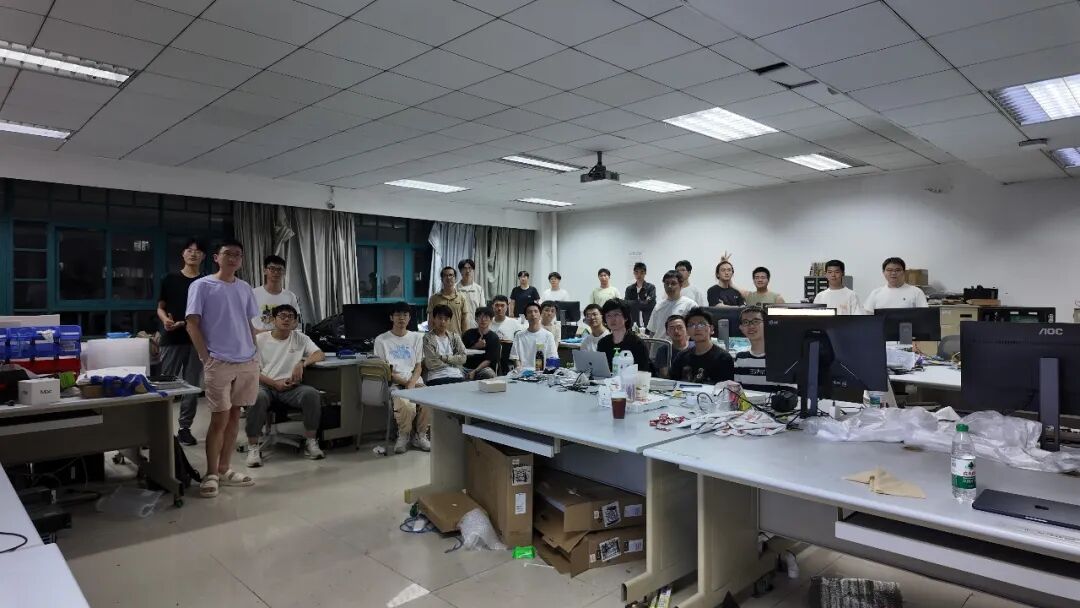
Group photo of the entire Supercomputing Team
The Zhejiang University Supercomputing Team is a high-level competition and research team primarily composed of undergraduates and open to recruitment from across the entire university. Here, you can not only learn hardcore technologies like system architecture and parallel programming and engage with cutting-edge topics in AI and scientific computing but also have the opportunity to step onto the stage of international top-tier competitions like ASC, ISC, and SC.
Every summer, the Supercomputing Team offers the "HPC101 Supercomputing Short-Term Course" to the entire university (Course homepage: https://hpc101.zjusct.io), systematically covering:
● Fundamentals of High-Performance Computing and Parallel Programming
● Practices in Supercomputing System Setup, Tuning, and Maintenance
● Performance Optimization Case Studies for Typical Scientific and AI Applications
Outstanding performers will have the opportunity to join the official competition team, representing Zhejiang University in international events like ASC, ISC, and SC. In the challenge of "limited power, unlimited performance," you will gain technical growth and lifelong team camaraderie.