Backto top
Location: homepage RESEARCH Institutes & Labs
The research endeavors of CCST are dedicated to advancing human understanding of the frontiers of computer science and developing solutions to the pressing challenges facing the world today. Currently, the college possesses 5 major national-level research platforms (comprising 3 State Key Labs and 2 research centers),12 provincial-level key laboratories/research centers, and 31 industry-academia joint laboratories with research funding exceeding ¥10 million each.
To date, CCST has been honored with 4 National Science and Technology Progress Awards, 2 National Technology Invention Awards, and 2 National Natural Science Awards. The college is home to 15 Highly Cited Researchers (Elsevier), 39 scientists ranked within the global top 2%, 6 IEEE Fellows, 3 ACM Fellows, and 1 AAAS Fellow. Furthermore, 12 faculty members serve in editorial roles such as Editor-in-Chief or Associate Editor for leading international journals. CCST has received distinguished/best paper awards at premier computer science conferences including ACM SIGSOFT 2025, ACM SIGMOD 2023, ASE 2020-ASE 2018, and ICSOC 2017,etc. It currently ranks 4th globally in the CSrankings (2024-2025).

In the beginning of CCST’s development in 1978, the founder of the ZJU CS department set the initial key research area of ZJU CCST as Artificial Intelligence and Computer Graphics, two of the pioneering research areas in China, and has made ample research achievements. With over 40 years of concerted effort, CCST has developed into a research institution with comprehensive research capabilities and significant world academic influence. It now compresses 5 major national-level research platforms (comprising 3 State Key Laboratories and 2 research centers), and conducts extensive research ranging from artificial and hybrid intelligence to service computing, mixed reality, cyberspace security, and so on.
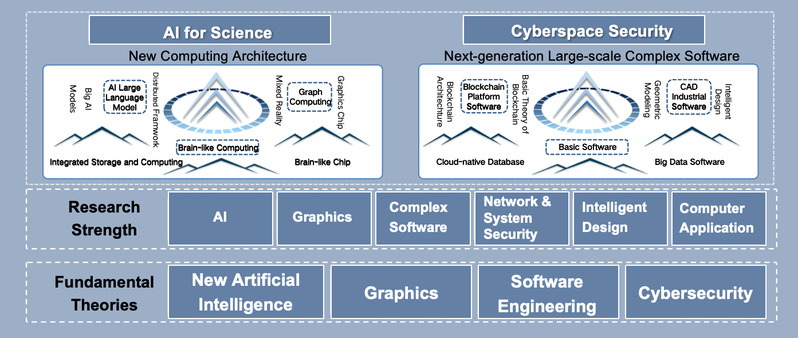
A vibrant research hub
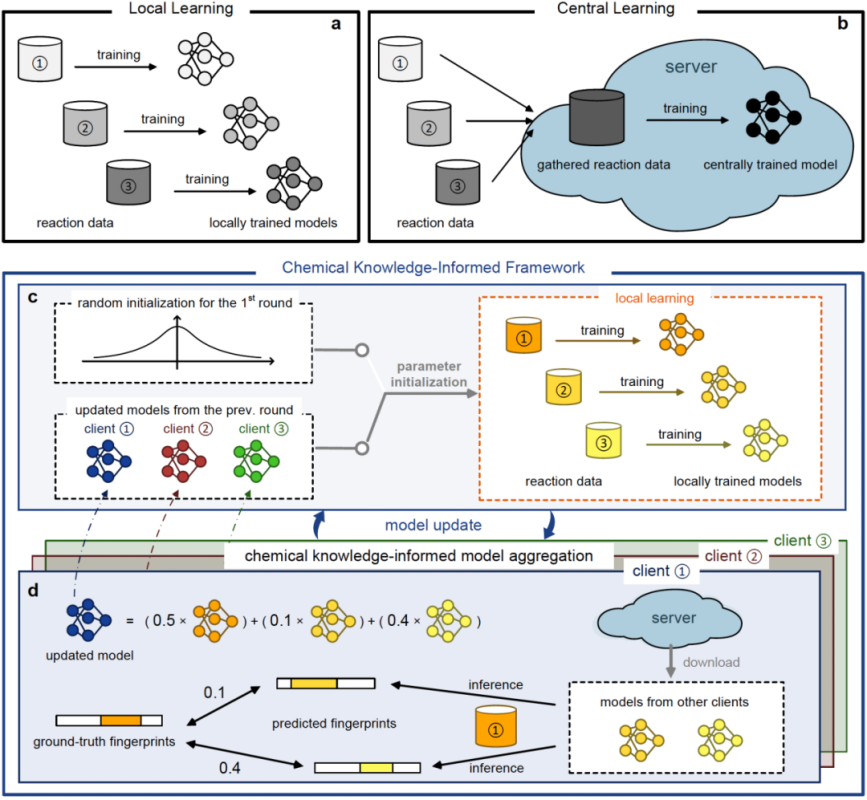
Chemical knowledge-informed framework for privacy-aware retrosynthesis learning
Nature Communications 2025
Researchers Wang Wenguan and Yang Yi have proposed a revolutionary privacy-preserving framework called CKIF in Nature Communications. This framework allows different institutions to collaboratively train models by exchanging only model parameters, without sharing any confidential chemical reaction data. Its core innovation is a chemical knowledge-guided intelligent aggregation mechanism, enabling AI to evaluate and integrate knowledge from multiple sources, significantly improving the accuracy of retrosynthesis predictions. This work pioneers a new paradigm for secure and efficient AI collaboration in fields like drug discovery.
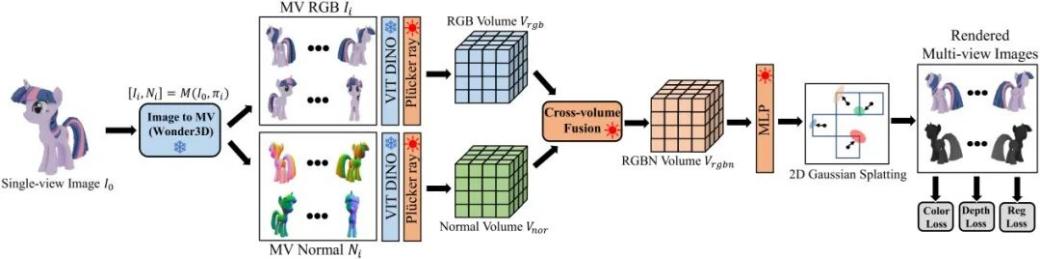
High-fidelity 3D Object Generation from Single Image with RGBN-Volume Gaussian Reconstruction Model
CVPR 2025
Researcher Shao Tianjia's team at the CAD&CG State Key Laboratory has proposed a new method named "GS-RGBN," overcoming the challenge of generating high-quality 3D objects from a single image. The method innovatively blends the structural advantages of voxels with the rendering efficiency of Gaussian representations, while integrating color and geometric normal information. This framework can generate detailed, view-consistent 3D assets from a single picture in seconds, excelling in both fidelity and speed, providing a powerful tool for VR/AR and content creation.
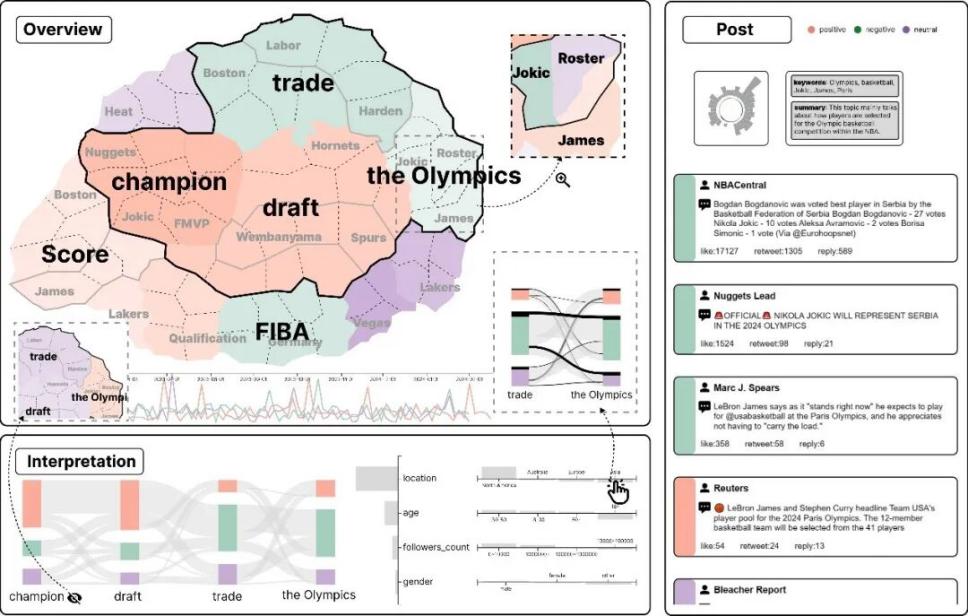
Causality-Based Visual Analytics of Sentiment Contagion in Social Media Topics
ConceptViz: A Visual Analytics Approach for Exploring Concepts in Large Language Models
IEEE VIS 2025
At the premier visualization conference IEEE VIS 2025, the laboratory's teams secured two major awards. Professor Wu Yingcai's team won the Best Paper Award for their research on causal visual analytics of sentiment contagion in social media. Professor Chen Wei's team received a Best Paper Honorable Mention for their work on a visual analytics system exploring concepts within large language models. Both projects introduce innovative visual analysis methods and systems in the fields of public opinion analysis and LLM interpretability, respectively.
Bio-plausible reconfigurable spiking neuron for neuromorphic computing
Science Advances 2025
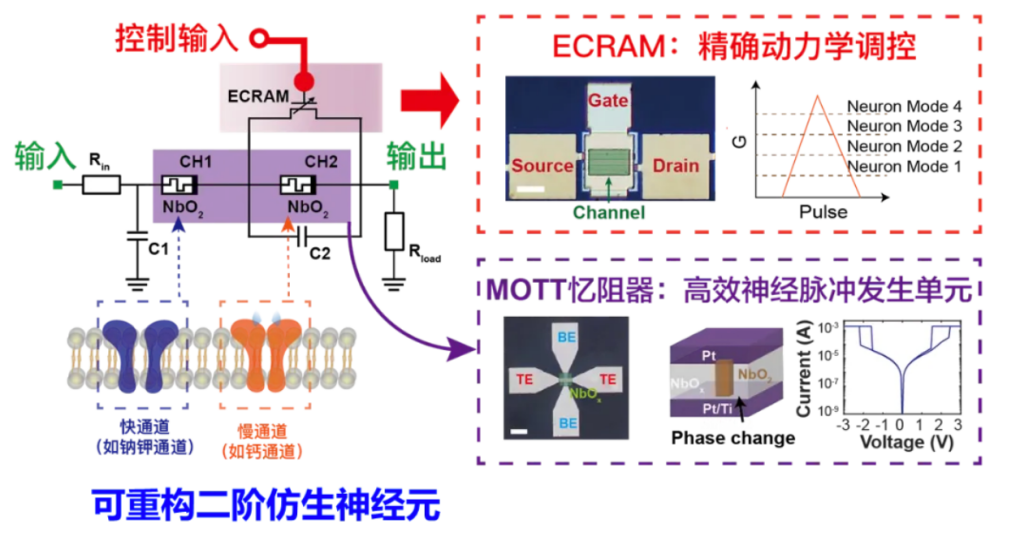
On February 5, 2025, a collaborative team led by Pan Gang and Lin Peng from the Zhejiang University State Key Lab of Brain-Machine Intelligence, College of Computer Science, and Liangzhu Lab, together with Researcher Kong Wei from Westlake University, published a paper titled "Bio-plausible reconfigurable spiking neuron for neuromorphic computing" online in Science Advances. This research leverages the efficient spike generation capability of MOTT memristors and the precise state modulation of ECRAM to develop a novel bio-plausible neuron that mimics biological neuronal operation. This neuron demonstrates efficient and flexible signal processing while utilizing fewer hardware resources and incurring lower costs. The breakthrough addresses the issues of complexity and high cost in traditional neuron designs, offering a fresh perspective for realizing more intelligent neuromorphic computing systems and charting new directions for the convergence and mutual advancement of artificial intelligence and brain science.
Heterogeneous integrated neuron circuit based on MOTT memristors and ECRAM
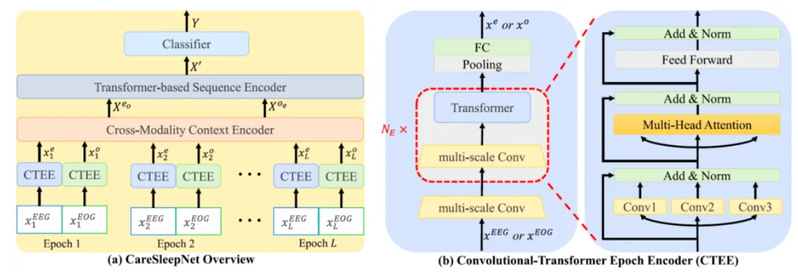
CareSleepNet: A Hybrid Deep Learning Network for Automatic Sleep Staging
IEEE Journal of Biomedical and Health Informatics 2024
In December 2024, research work titled "CareSleepNet: A Hybrid Deep Learning Network for Automatic Sleep Staging" by teams led by Researcher Zhao Sha and Professor Pan Gang from the Zhejiang University State Key Lab of Brain-Machine Intelligence/College of Computer Science and Technology, and Professor Li Tao and Researcher Jiang Haiteng from the State Key Lab of Brain-Machine Intelligence/School of Medicine, was published online as a cover article in the important biomedical engineering journal IEEE Journal of Biomedical and Health Informatics (IF=6.7). The study proposes a hybrid deep learning network named CareSleepNet (meaning "care for sleep"), which achieves innovative breakthroughs in local and global feature extraction and cross-modal signal modeling to address limitations in automatic sleep staging. It provides more reliable technical support for the precise diagnosis of sleep disorders, highlighting the broad application prospects of brain-machine regulation technology in the field of health diagnostics.
From One Stolen Utterance: Assessing the Risks of Voice Cloning in the AIGC Era
IEEE Symposium on Security and Privacy 2025
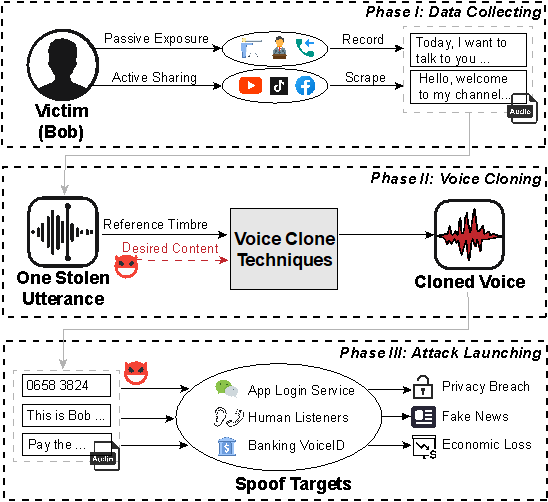
In May 2024, a team from the Zhejiang University State Key Lab of Blockchain and Data Security conducted in-depth testing on eight voice authentication platforms, including smart speakers, social apps, and even banking systems. Based on voice data from over 7,000 speakers and five mainstream voice cloning tools, and organizing listening tests with real users, they found that voice cloning attacks achieved an average success rate of over 80%, with human ear discernibility below 50%, close to random guessing. Experiments demonstrated that an attacker needs only one sample of a victim's voice to "clone" an AI voice capable of deceiving both human ears and voice authentication systems. The research result, "From One Stolen Utterance: Assessing the Risks of Voice Cloning in the AIGC Era," was accepted by the top-tier international information security conference IEEE Symposium on Security and Privacy 2025.
Basic workflow of voice cloning
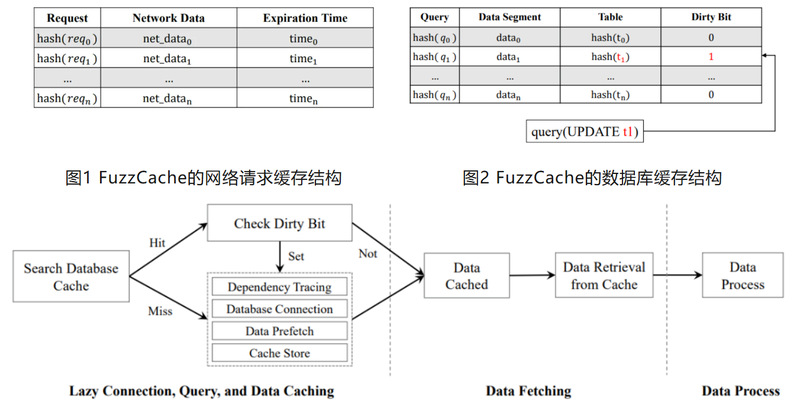
Cross-silo Federated Learning with Record-level Personalized Differential PrivacyFuzzCache: Optimizing Web Application Fuzzing Through Software-Based Data Cache
ACM Conference on Computer and Communications Security 2024
At the 31st ACM Conference on Computer and Communications Security held from October 14-18, 2024, the Zhejiang University State Key Lab of Blockchain and Data Security received two ACM CCS 2024 Distinguished Paper Awards. The awarded research achievements were "Cross-silo Federated Learning with Record-level Personalized Differential Privacy" from the team including Researcher Liu Jinfei and "FuzzCache: Optimizing Web Application Fuzzing Through Software-Based Data Cache" from the team including Researcher Zhang Mingxue. These awards highlight the laboratory's new breakthroughs at the forefront of data security and network security research.
MaterialPicker: Multi-Modal DiT-Based Material Generation
SIGGRAPH 2025 & ACM Transactions on Graphics journal
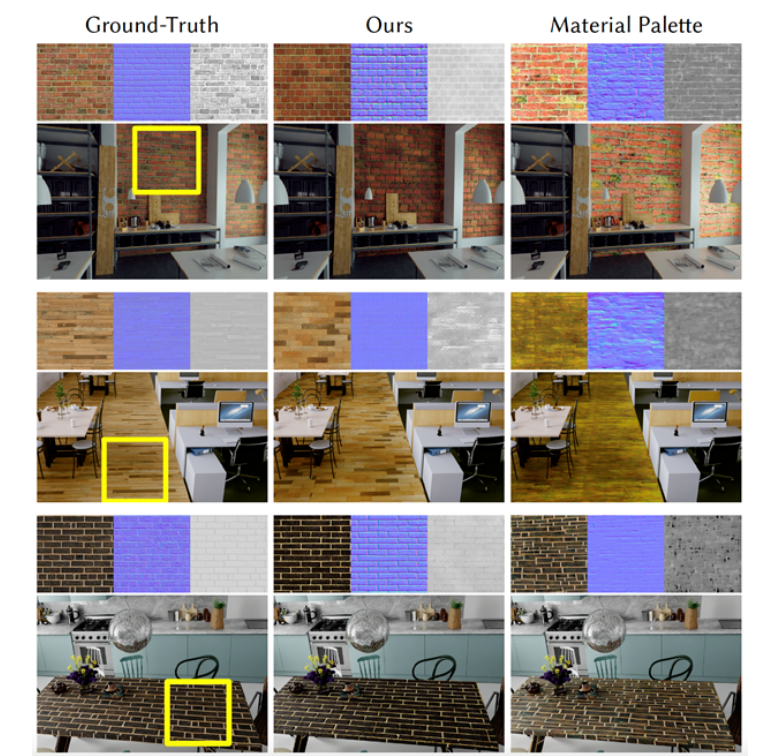
On May 30, 2025, a collaborative paper "MaterialPicker: Multi-Modal DiT-Based Material Generation" from the Zhejiang University State Key Lab of CAD&CG and Adobe Research was accepted to SIGGRAPH 2025 and will be published in the ACM Transactions on Graphics journal. This research proposes a multi-modal material generation model based on Diffusion Transformer, capable of generating directly renderable PBR material maps from natural images and/or text prompts. The method significantly improves the quality and robustness of material modeling under non-ideal shooting conditions such as view tilt, surface occlusion, and complex lighting. Systematic quantitative and qualitative evaluations demonstrate its superiority over existing methods in material diversity generation and distortion correction, providing an efficient and reliable solution for applications like digital content creation, inverse rendering, and virtual asset generation.
When Gaussian Meets Surfel: Ultra-fast High-fidelity Radiance Field Rendering
SIGGRAPH 2025
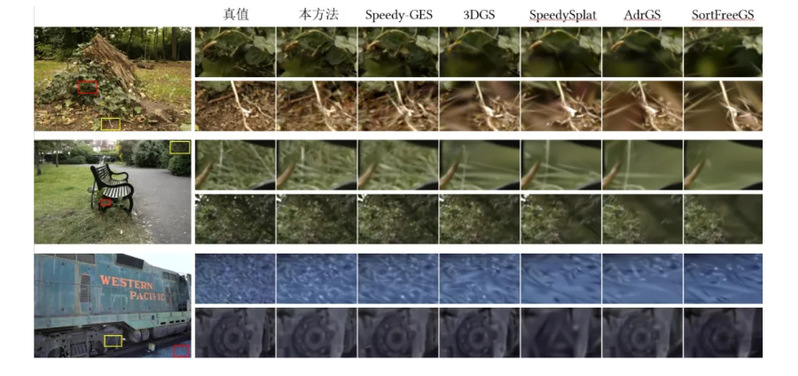
On May 21, 2025, a research team led by Professor Zhou Kun from the Zhejiang University State Key Lab of CAD&CG presented a paper titled "When Gaussian Meets Surfel: Ultra-fast High-fidelity Radiance Field Rendering" at the SIGGRAPH 2025 conference. The paper proposes a dual-scale radiance field representation method called Gaussian-enhanced Surfels, which combines hybrid modeling of opaque 2D surfels and 3D Gaussians, achieving breakthrough progress in rendering speed and multi-view consistency. This research provides a new technical path for real-time high-fidelity 3D reconstruction and rendering.
Comparison results of novel view synthesis tasks; this method achieves high-fidelity detail preservation.
Comparison of this research method and its extended versions (in bold) with other methods in terms of rendering frame rates at 1080p and 2160p resolutions, storage overhead (in MB), and training time (in minutes).
Text-based Animatable 3D Avatars with Morphable Model Alignment
SIGGRAPH 2025
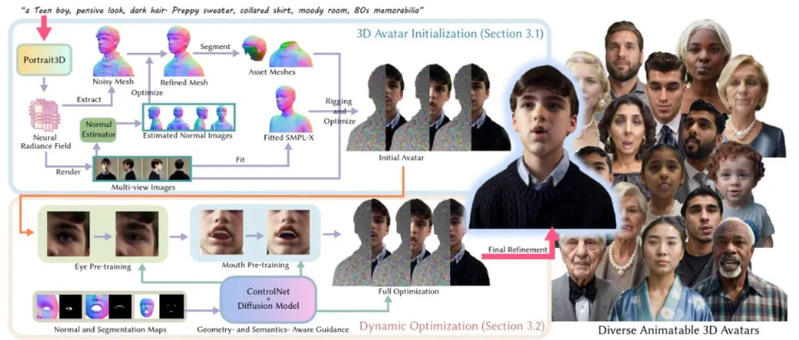
On May 19, 2025, a research team led by Professor Jin Xiaogang from the Zhejiang University State Key Lab of CAD&CG presented a paper titled "Text-based Animatable 3D Avatars with Morphable Model Alignment" at the SIGGRAPH 2025 conference. The paper proposes an innovative framework, AnimPortrait3D, which enables the generation of realistic, animatable 3D Gaussian splatting avatars from text while ensuring alignment with morphable models. The research introduces two key technologies: firstly, utilizing pre-trained text-to-3D model priors to initialize the avatar, ensuring robustness in its appearance, geometry, and binding relationship with the morphable model; secondly, employing a ControlNet conditioned on semantic segmentation maps and normal maps rendered from the morphable model to optimize the dynamic expressions of the initial 3D avatar for precise alignment. This method surpasses existing techniques in synthesis quality, alignment accuracy, and animation fidelity, advancing the field of text-based animatable 3D head avatar generation.
RoMo: A Robust Solver for Full-body Unlabeled Optical Motion Capture
SIGGRAPH ASIA 2024
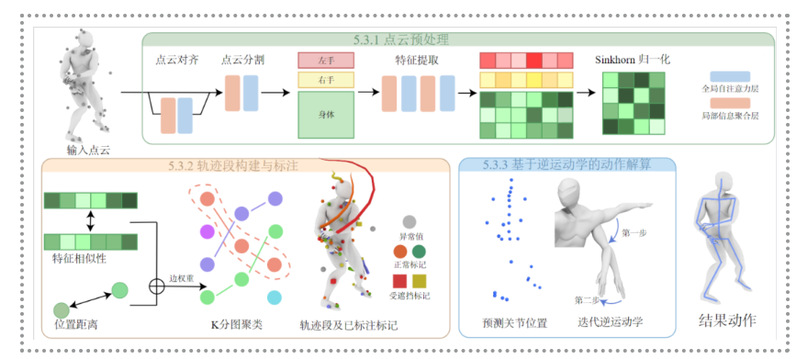
On December 25, 2024, a research team led by Professor Jin Xiaogang from the Zhejiang University State Key Lab of CAD&CG published a paper online titled "RoMo: A Robust Solver for Full-body Unlabeled Optical Motion Capture" at the SIGGRAPH ASIA 2024 conference. The research significantly improved the accuracy of labeling and solving optical motion capture data through a K-partition graph-based clustering algorithm and a hybrid solver incorporating inverse kinematics. The proposed RoMo motion capture framework provides a robust solution for labeling and solving optical motion capture data, offering new design ideas for the development of motion capture systems.
System framework diagram of the proposed method
GauWN: Gaussian-smoothed Winding Number and its Derivatives
SIGGRAPH Asia 2024
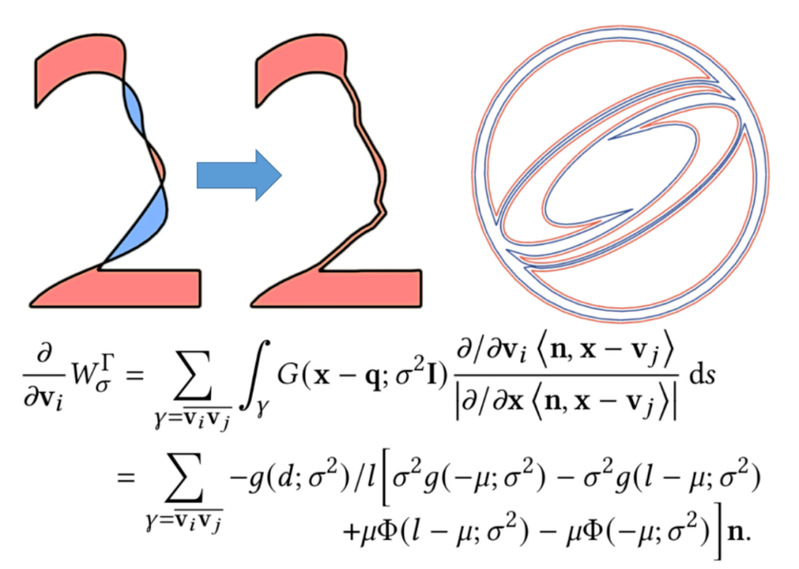
On October 28, 2024, the research paper "GauWN: Gaussian-smoothed Winding Number and its Derivatives" from the team of Professors Bao Hujun and Huang Jin at the Zhejiang University State Key Lab of CAD&CG was accepted to SIGGRAPH Asia 2024. The paper proposes a new fundamental tool for geometry processing—the Gaussian-smoothed Winding Number. By leveraging this tool, the implicit and explicit representations of geometric shapes can be differentiably coupled within the same optimization framework, enabling applications such as curve self-intersection removal, interactive editing, and offsetting.
Observing a Robot Peer's Failures Facilitates Students' Classroom Learning
Science Robotics 2025
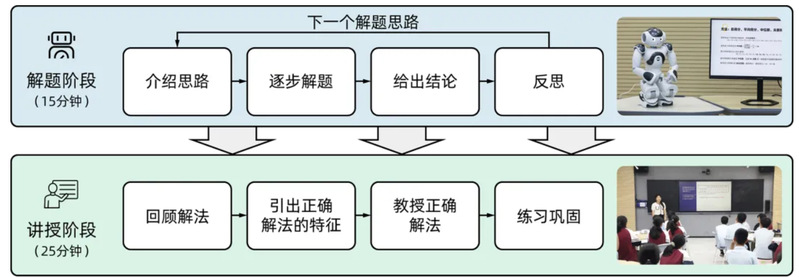
On September 12, 2025—this was a snapshot of a classroom implementing the "Robot Peer Productive Failure" teaching method proposed by the research team of Chen Liuqing from the Zhejiang University College of Computer Science and Technology. The related findings, titled "Observing a Robot Peer's Failures Facilitates Students' Classroom Learning," were published in the authoritative international journal Science Robotics on September 10, 2025.
Robot interaction design for the “robot peer productive failure” teaching method
Less is More: On the Importance of Data Quality for Unit Test Generation”&“LLM4SZZ: Enhancing SZZ Algorithm with Context-Enhanced Assessment on Large Language Models”
ACM International Conference on the Foundations of Software Engineering and ACM SIGSOFT International Symposium on Software Testing and Analysis 2025
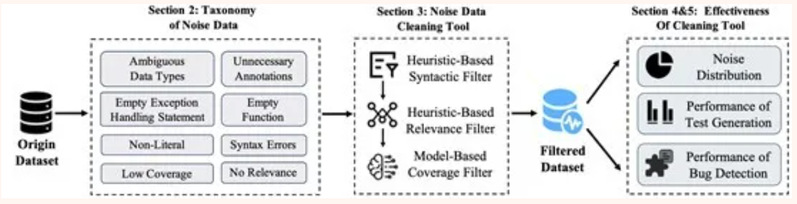
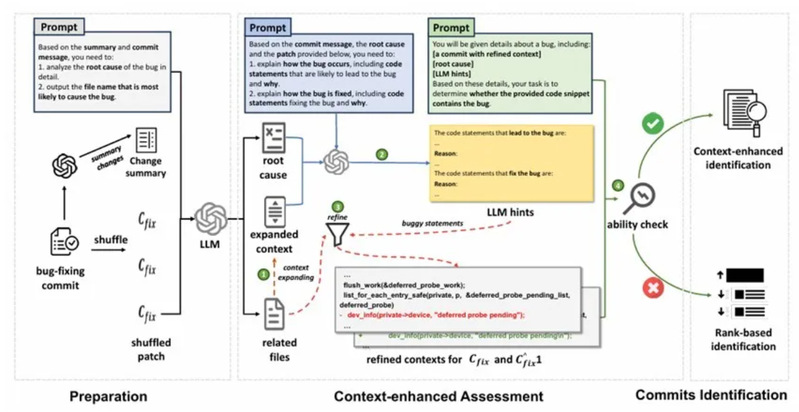
On July 6, 2025, the top software engineering conferences the ACM International Conference on the Foundations of Software Engineering and the ACM SIGSOFT International Symposium on Software Testing and Analysis were successfully held concurrently in Trondheim, Norway. Two papers from the software engineering team of the College of Computer Science received the ACM SIGSOFT Distinguished Paper Award at FSE 2025 and the ACM SIGSOFT Distinguished Paper Award at ISSTA 2025, respectively. The awarded research achievements were "Less is More: On the Importance of Data Quality for Unit Test Generation" and "LLM4SZZ: Enhancing SZZ Algorithm with Context-Enhanced Assessment on Large Language Models".
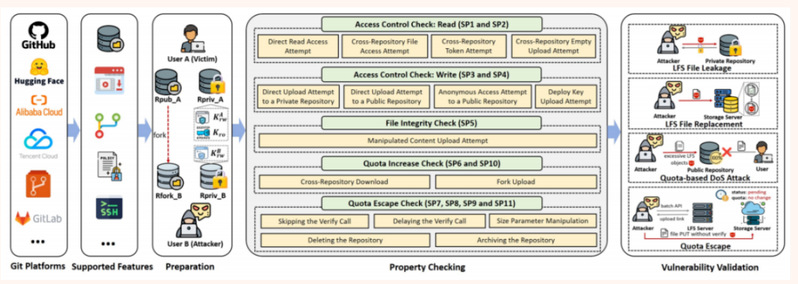
Unveiling Security Vulnerabilities in Git Large File Storage Protocol
IEEE Symposium on Security and Privacy 2025
On June 23, 2025, the IEEE Symposium on Security and Privacy, one of the "four top conferences" in cybersecurity, was successfully held in San Francisco, USA. The paper "Unveiling Security Vulnerabilities in Git Large File Storage Protocol" from the Network System Security and Privacy Laboratory of the Zhejiang University College of Computer Science and Technology was accepted by the conference.
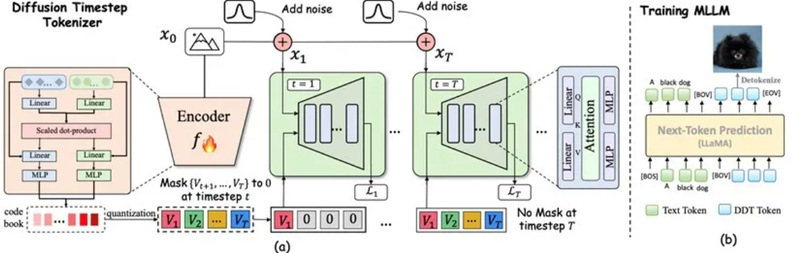
Generative Multimodal Pretraining with Discrete Diffusion Timestep Tokens
IEEE/CVF Conference on Computer Vision and Pattern Recognition 2025
On June 20, 2025, at the IEEE/CVF Conference on Computer Vision and Pattern Recognition, the paper "Generative Multimodal Pretraining with Discrete Diffusion Timestep Tokens" from the DCD Lab team of the Zhejiang University College of Computer Science and Technology stood out from 13,008 submissions and received the conference's sole Best Student Paper Honorable Mention Award. This is the first time a paper with Zhejiang University as the first affiliation has received this award.
The College of Computer Science and Technology educates future leaders in computer science with interdisciplinary innovation capabilities to address global challenges in the AI2.0 world.
Copyright © 2020 College of Computer Science and Technology, Zhejiang University